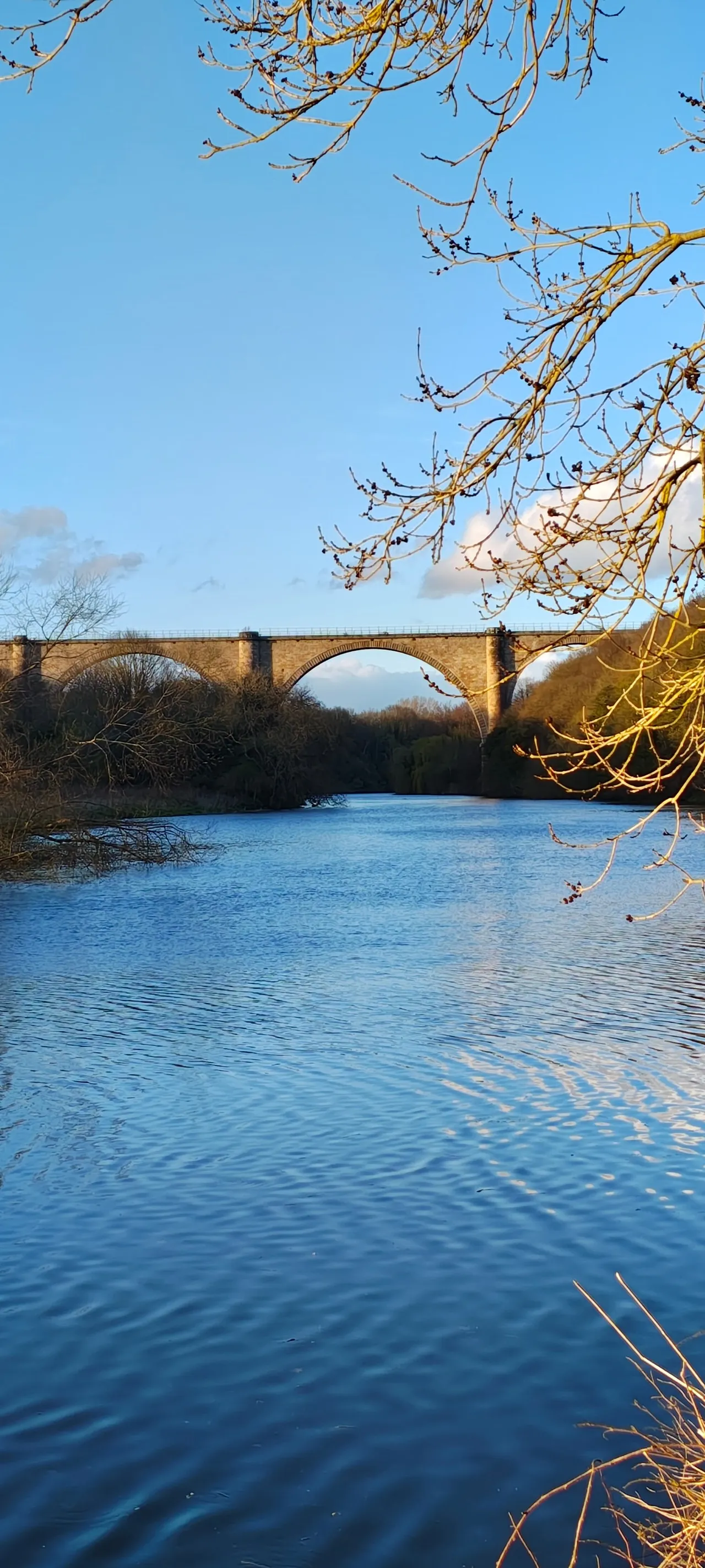
Victoria Viaduct is a striking 19th‑century railway viaduct near Houghton le Spring that embodies the region’s industrial transport history. Erected to carry rail traffic across the steep Wear valley, it became a key link for moving coal and passengers between local collieries and coastal ports; today it stands as a prominent industrial-era landmark in County Durham.
Architecturally the viaduct combines robust masonry piers with long metal spans — a practical Victorian solution to crossing wide valleys while supporting heavy trains. The rhythm of arches and the scale of the structure give it visual drama against the surrounding farmland and river corridor, and surviving original engineering elements illustrate early railway construction techniques. Historically important for the development of northeast England’s rail network and mining economy, the viaduct is recognized locally for its heritage value and is visible from several local viewpoints, including the nearby Penshaw Monument area. Unique features for visitors include interpretive plaques at access points explaining the line’s role in the coal trade and occasional community heritage events focused on industrial archaeology. Access to the structure itself may be restricted where rail lines or preservation works remain in place.
Architecturally the viaduct combines robust masonry piers with long metal spans — a practical Victorian solution to crossing wide valleys while supporting heavy trains. The rhythm of arches and the scale of the structure give it visual drama against the surrounding farmland and river corridor, and surviving original engineering elements illustrate early railway construction techniques. Historically important for the development of northeast England’s rail network and mining economy, the viaduct is recognized locally for its heritage value and is visible from several local viewpoints, including the nearby Penshaw Monument area. Unique features for visitors include interpretive plaques at access points explaining the line’s role in the coal trade and occasional community heritage events focused on industrial archaeology. Access to the structure itself may be restricted where rail lines or preservation works remain in place.
🗺 Map
Want to see more? Download the app. It's free!
- Weather informationCheck the forecast, clouds, rain, visibility, temperature, and wind before you go. Download it for free!
- How to get there?Choose how to get there by car, walking, or public transport from your location. Download it for free!
- CollectionsSave this spot in lists for future trips.
- Visited PlacesMark places you have visited and see them together on one map.
- Favourite RegionsGet alerts when new spots are added in your favourite regions.
- Offline mapsDownload maps before a trip for places with weak connection.
- Upload your photosUpload your photos and help other travelers find good photo spots.
- Audio guidesCreate narrated guides to listen to while you visit a place.