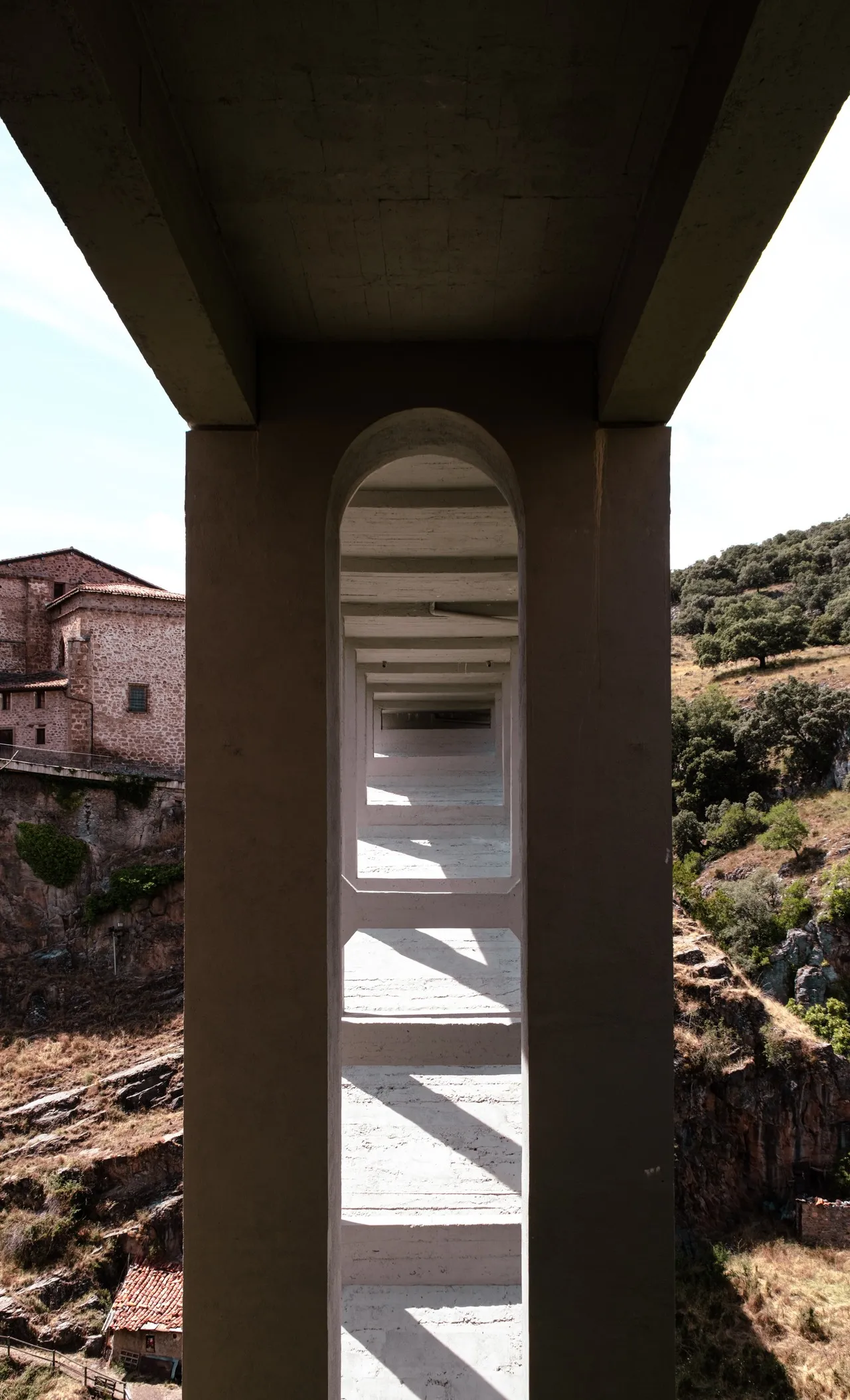
The Viaducto de San Martín is a striking architectural marvel located in Ortigosa de Cameros, a picturesque village in the La Rioja region of Spain. This viaduct is a significant example of early 20th-century engineering and forms part of the now-defunct railway line connecting Logroño with the mining town of Villoslada de Cameros. Built in the early 1900s, the viaduct played a crucial role in the economic development of the region, facilitating the transport of goods and people across the rugged terrain of the Sierra de Cameros.
Spanning approximately 150 meters in length and standing at a height of about 30 meters, the viaduct is composed of multiple stone arches that blend harmoniously with the surrounding landscape. The craftsmanship of the stonework reflects the engineering prowess of its time, making it a point of interest for both history enthusiasts and those with an appreciation for industrial architecture. Today, the Viaducto de San Martín is part of a scenic walking route, offering visitors breathtaking views of the lush valley below. The route is especially popular among hikers and photographers who are drawn to the area's natural beauty and the viaduct's impressive structure. Its integration into the landscape and the historical context it provides makes it a unique destination for those exploring the rich cultural and natural heritage of La Rioja.
Spanning approximately 150 meters in length and standing at a height of about 30 meters, the viaduct is composed of multiple stone arches that blend harmoniously with the surrounding landscape. The craftsmanship of the stonework reflects the engineering prowess of its time, making it a point of interest for both history enthusiasts and those with an appreciation for industrial architecture. Today, the Viaducto de San Martín is part of a scenic walking route, offering visitors breathtaking views of the lush valley below. The route is especially popular among hikers and photographers who are drawn to the area's natural beauty and the viaduct's impressive structure. Its integration into the landscape and the historical context it provides makes it a unique destination for those exploring the rich cultural and natural heritage of La Rioja.
🗺 Map
Want to see more? Download the app. It's free!
- Weather informationCheck the forecast, clouds, rain, visibility, temperature, and wind before you go. Download it for free!
- How to get there?Choose how to get there by car, walking, or public transport from your location. Download it for free!
- CollectionsSave this spot in lists for future trips.
- Visited PlacesMark places you have visited and see them together on one map.
- Favourite RegionsGet alerts when new spots are added in your favourite regions.
- Offline mapsDownload maps before a trip for places with weak connection.
- Upload your photosUpload your photos and help other travelers find good photo spots.
- Audio guidesCreate narrated guides to listen to while you visit a place.