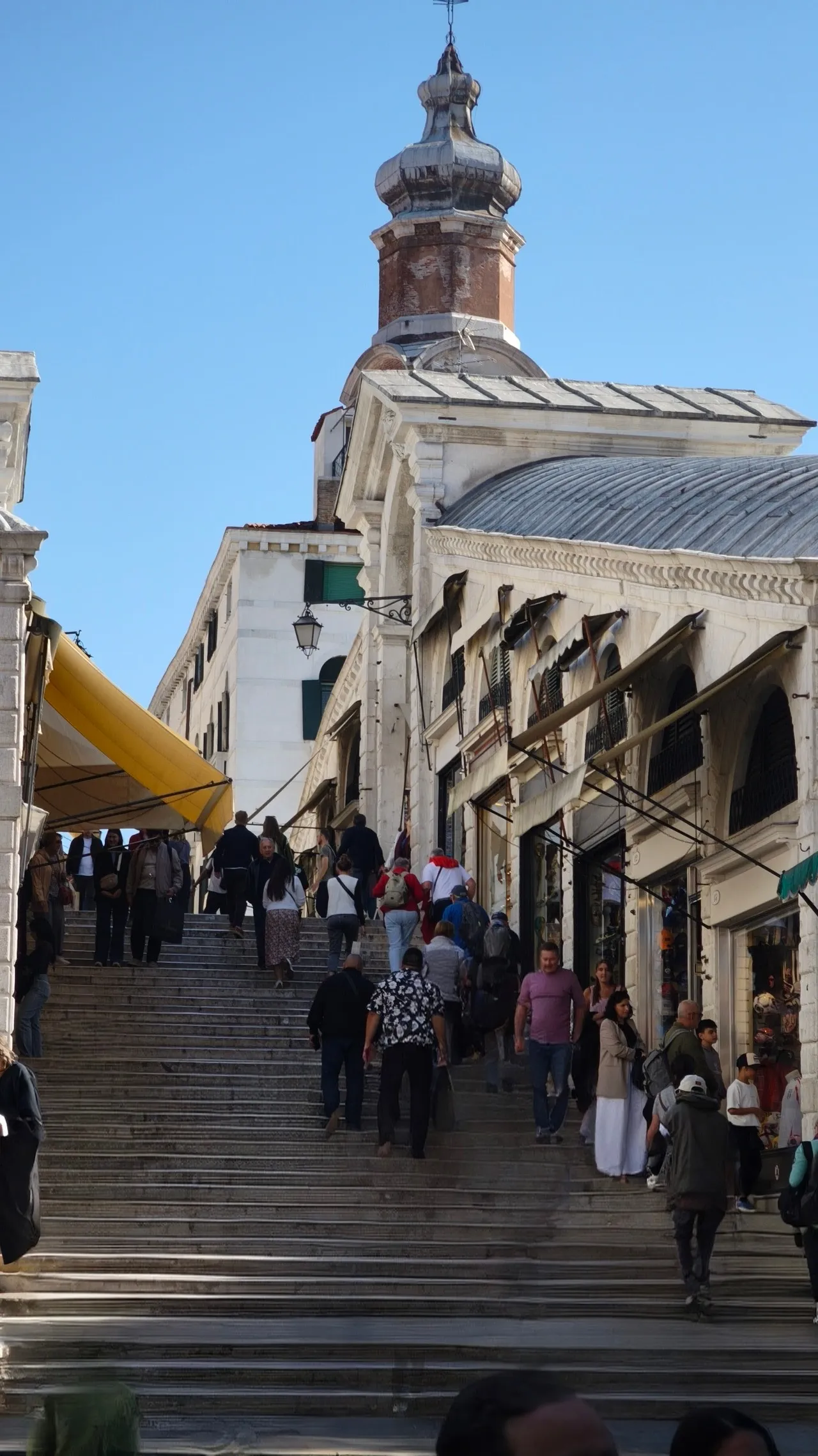
The Ponte di Rialto is the oldest and most iconic bridge spanning Venice’s Grand Canal, marking the historic Rialto commercial district. It is important as both a practical crossing connecting San Marco and San Polo and as a symbol of Venice’s mercantile power: the surrounding Rialto Market was the city’s financial and trade heart for centuries.
Historically, a succession of wooden bridges and a floating pontoon occupied the site from the 12th century; after repeated collapses and fires, the present stone bridge was completed in 1591 by Antonio da Ponte following a bold single-span design that replaced earlier proposals. Architecturally it is notable for its graceful single stone arch (about 28 meters), two rows of small shops along the span, and a central balustraded viewing area—an engineering and aesthetic statement in late Renaissance Venice. Unique local details: the bridge frames views up and down the Grand Canal, has long hosted jewelers and souvenir stalls, fronts directly onto the historic Rialto Market (fish and produce stalls), and sits on the route of traditional water processions such as the Regata Storica. It is a strictly pedestrian crossing and remains one of the most photographed—and historically resonant—landmarks in the city.
Historically, a succession of wooden bridges and a floating pontoon occupied the site from the 12th century; after repeated collapses and fires, the present stone bridge was completed in 1591 by Antonio da Ponte following a bold single-span design that replaced earlier proposals. Architecturally it is notable for its graceful single stone arch (about 28 meters), two rows of small shops along the span, and a central balustraded viewing area—an engineering and aesthetic statement in late Renaissance Venice. Unique local details: the bridge frames views up and down the Grand Canal, has long hosted jewelers and souvenir stalls, fronts directly onto the historic Rialto Market (fish and produce stalls), and sits on the route of traditional water processions such as the Regata Storica. It is a strictly pedestrian crossing and remains one of the most photographed—and historically resonant—landmarks in the city.
🗺 Map
Want to see more? Download the app. It's free!
- Weather informationCheck the forecast, clouds, rain, visibility, temperature, and wind before you go. Download it for free!
- How to get there?Choose how to get there by car, walking, or public transport from your location. Download it for free!
- CollectionsSave this spot in lists for future trips.
- Visited PlacesMark places you have visited and see them together on one map.
- Favourite RegionsGet alerts when new spots are added in your favourite regions.
- Offline mapsDownload maps before a trip for places with weak connection.
- Upload your photosUpload your photos and help other travelers find good photo spots.
- Audio guidesCreate narrated guides to listen to while you visit a place.