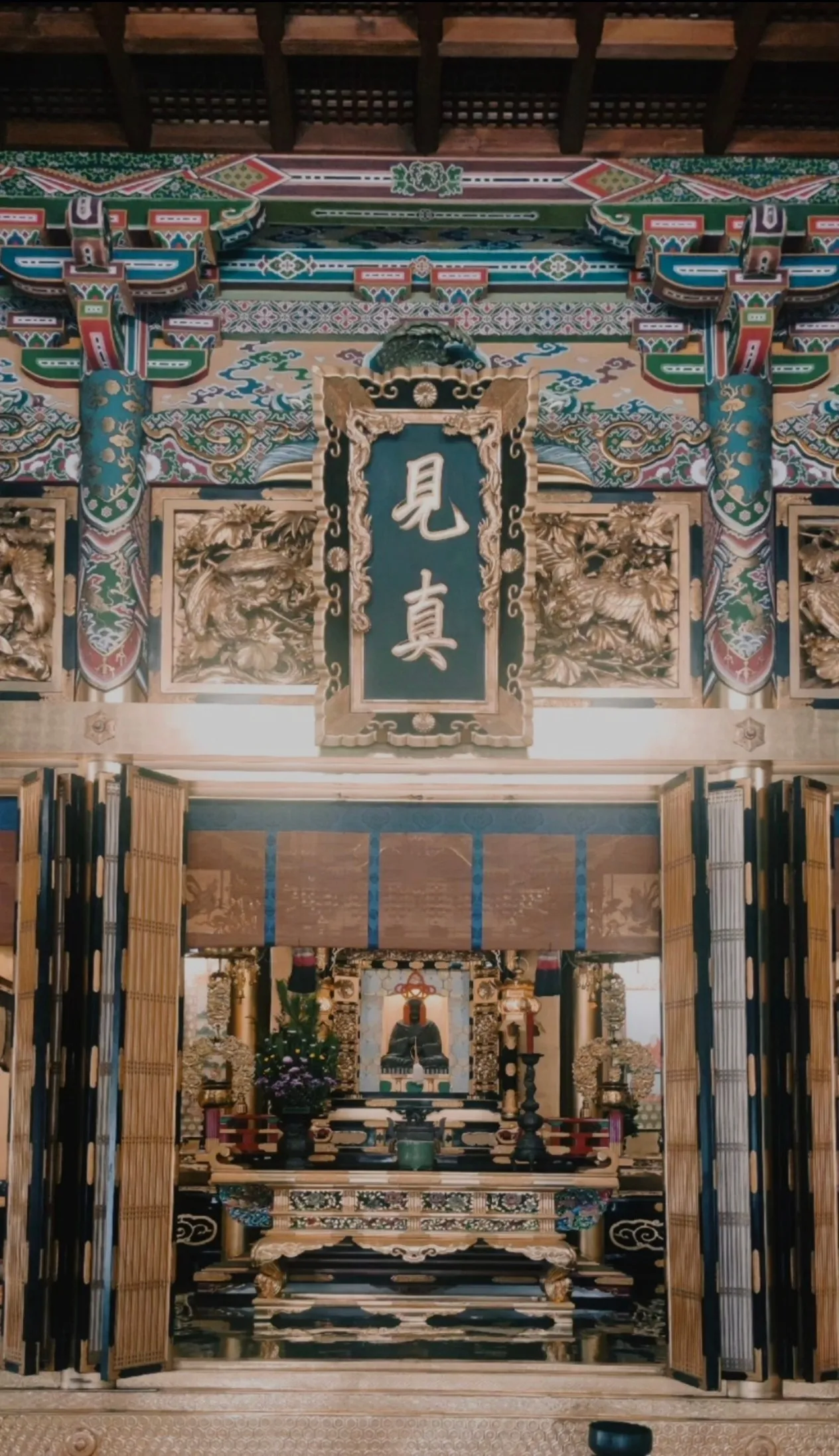
Nishi Hongan-ji is one of Kyoto’s principal Buddhist temples and the head temple of the Jōdo Shinshū (True Pure Land) Honganji school. Its compound houses grand halls, historic mausolea and cultural treasures that illustrate the temple’s central role in Japanese religious life, art and politics since the late 16th century. Founded when Tokugawa Ieyasu moved the Hongan-ji sect’s leadership to Kyoto in 1591, Nishi Hongan-ji preserves structures commissioned and rebuilt during the Momoyama and early Edo periods, reflecting both devotional function and samurai-era patronage.
Architecturally notable are the Amida Hall (Goeido) and the Founder's Hall (Ohtani Mausoleum/Otani Sobyo) with vast irimoya (hip-and-gable) roofs, elaborate lacquerwork, and massively scaled wooden interiors that convey a sense of ceremonial gravity. The Karamon gate, a designated National Treasure, showcases intricate karakuri carving and gilded ornamentation typical of Momoyama exuberance. Gardens and subsidiary buildings contain sliding-door paintings (fusuma-e) and lacquered fittings by leading artisans. Unique features include seasonal public viewing of historic Buddhist statuary and rotating exhibitions in the temple’s museum, as well as an annual observance of the Goeido-e services honoring Shinran. Some inner halls require modest admission and have restricted access during ceremonies, reflecting ongoing religious use rather than being purely museumized.
Architecturally notable are the Amida Hall (Goeido) and the Founder's Hall (Ohtani Mausoleum/Otani Sobyo) with vast irimoya (hip-and-gable) roofs, elaborate lacquerwork, and massively scaled wooden interiors that convey a sense of ceremonial gravity. The Karamon gate, a designated National Treasure, showcases intricate karakuri carving and gilded ornamentation typical of Momoyama exuberance. Gardens and subsidiary buildings contain sliding-door paintings (fusuma-e) and lacquered fittings by leading artisans. Unique features include seasonal public viewing of historic Buddhist statuary and rotating exhibitions in the temple’s museum, as well as an annual observance of the Goeido-e services honoring Shinran. Some inner halls require modest admission and have restricted access during ceremonies, reflecting ongoing religious use rather than being purely museumized.
🗺 Map
Want to see more? Download the app. It's free!
- Weather informationCheck the forecast, clouds, rain, visibility, temperature, and wind before you go. Download it for free!
- How to get there?Choose how to get there by car, walking, or public transport from your location. Download it for free!
- CollectionsSave this spot in lists for future trips.
- Visited PlacesMark places you have visited and see them together on one map.
- Favourite RegionsGet alerts when new spots are added in your favourite regions.
- Offline mapsDownload maps before a trip for places with weak connection.
- Upload your photosUpload your photos and help other travelers find good photo spots.
- Audio guidesCreate narrated guides to listen to while you visit a place.