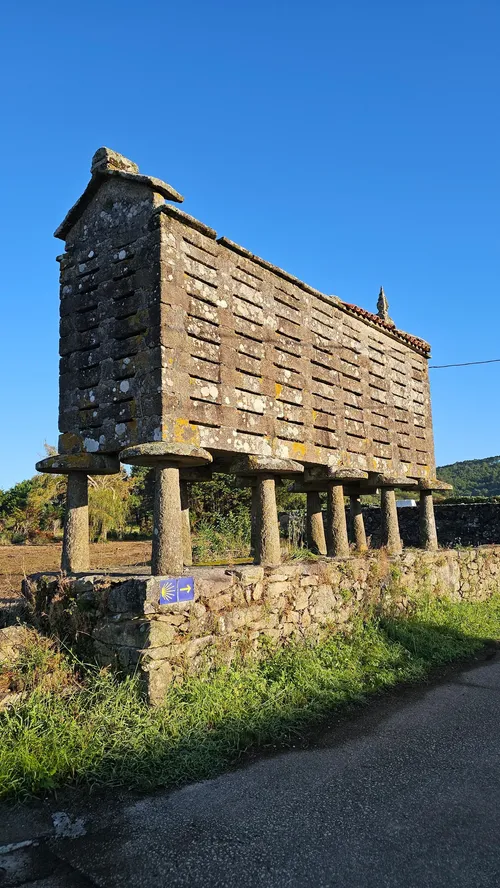
The Granero Hórreo tradicional in Fisterra, Spain, is a fascinating example of traditional Galician architecture. Hórreos are raised granaries used predominantly in the northwest of the Iberian Peninsula, particularly in Galicia. These structures are essential for understanding the agricultural heritage of the region. They were historically used to store grain and other foodstuffs, protecting them from moisture and rodents due to their elevated design.
Typically constructed from wood or stone, hórreos are supported by pillars topped with flat stones called "tornarratos," which prevent rodents from climbing up. The design allows for ventilation, crucial for keeping the stored goods dry. The hórreo in Fisterra is particularly interesting as it is located in a region known for its rugged coastline and maritime history, offering a glimpse into how traditional farming practices adapted to the local environment. Fisterra itself is a town with deep historical significance, often considered the "end of the world" in ancient times due to its location at the westernmost point of Spain. Visitors to the area can explore the hórreo as part of a broader journey through Galicia's rich cultural and historical landscape, which includes the famous Camino de Santiago pilgrimage route that ends nearby.
Typically constructed from wood or stone, hórreos are supported by pillars topped with flat stones called "tornarratos," which prevent rodents from climbing up. The design allows for ventilation, crucial for keeping the stored goods dry. The hórreo in Fisterra is particularly interesting as it is located in a region known for its rugged coastline and maritime history, offering a glimpse into how traditional farming practices adapted to the local environment. Fisterra itself is a town with deep historical significance, often considered the "end of the world" in ancient times due to its location at the westernmost point of Spain. Visitors to the area can explore the hórreo as part of a broader journey through Galicia's rich cultural and historical landscape, which includes the famous Camino de Santiago pilgrimage route that ends nearby.
🗺 Map
🎫 Tourist attractions
🌦 Weather information
Get weather information, and much more, from the app. Download it for free!
🚕 How to get there?
Get routes information (by car, walking, public transport, etc), and much more, from the app. Download it for free!