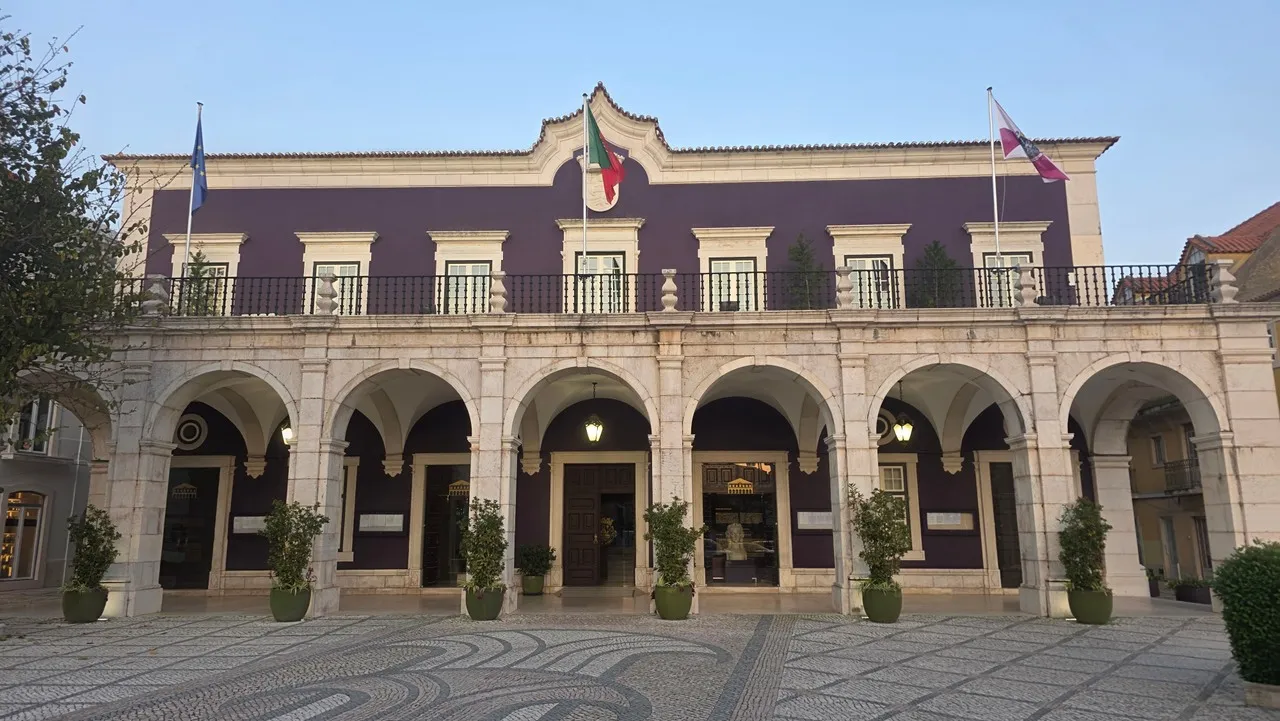
Edifício dos Paços do Concelho is Setúbal’s municipal headquarters and a civic landmark that anchors Praça de Bocage. As the seat of the Câmara Municipal, it embodies the city’s administrative and ceremonial life: council sessions, official receptions and periodic public exhibitions take place here, making it a focal point for local governance and community events.
The building’s relevance derives from its representational role and its urban presence. Architecturally it reflects the historicist tendencies common to Iberian town halls of the turn of the 20th century: a symmetrical, formal façade articulated in stone and stucco, framed windows and a prominent central portal often surmounted by the municipal coat of arms. Decorative details — balustrades, pilasters and a rhythm of arched and rectangular openings — give the façade civic dignity; a modest tower or clock element traditionally marks its civic function. Interior spaces include a ceremonial chamber and reception rooms finished with period woodwork, plaster ornament and local tile (azulejos) accents, used for official ceremonies. Historically, the building consolidated municipal functions previously scattered around the old quarter, signaling Setúbal’s modernization. Its role in civic rituals and visibility on the main square make it a small but telling expression of the city’s identity and governance.
The building’s relevance derives from its representational role and its urban presence. Architecturally it reflects the historicist tendencies common to Iberian town halls of the turn of the 20th century: a symmetrical, formal façade articulated in stone and stucco, framed windows and a prominent central portal often surmounted by the municipal coat of arms. Decorative details — balustrades, pilasters and a rhythm of arched and rectangular openings — give the façade civic dignity; a modest tower or clock element traditionally marks its civic function. Interior spaces include a ceremonial chamber and reception rooms finished with period woodwork, plaster ornament and local tile (azulejos) accents, used for official ceremonies. Historically, the building consolidated municipal functions previously scattered around the old quarter, signaling Setúbal’s modernization. Its role in civic rituals and visibility on the main square make it a small but telling expression of the city’s identity and governance.
🗺 Map
Want to see more? Download the app. It's free!
- Weather informationCheck the forecast, clouds, rain, visibility, temperature, and wind before you go. Download it for free!
- How to get there?Choose how to get there by car, walking, or public transport from your location. Download it for free!
- CollectionsSave this spot in lists for future trips.
- Visited PlacesMark places you have visited and see them together on one map.
- Favourite RegionsGet alerts when new spots are added in your favourite regions.
- Offline mapsDownload maps before a trip for places with weak connection.
- Upload your photosUpload your photos and help other travelers find good photo spots.
- Audio guidesCreate narrated guides to listen to while you visit a place.