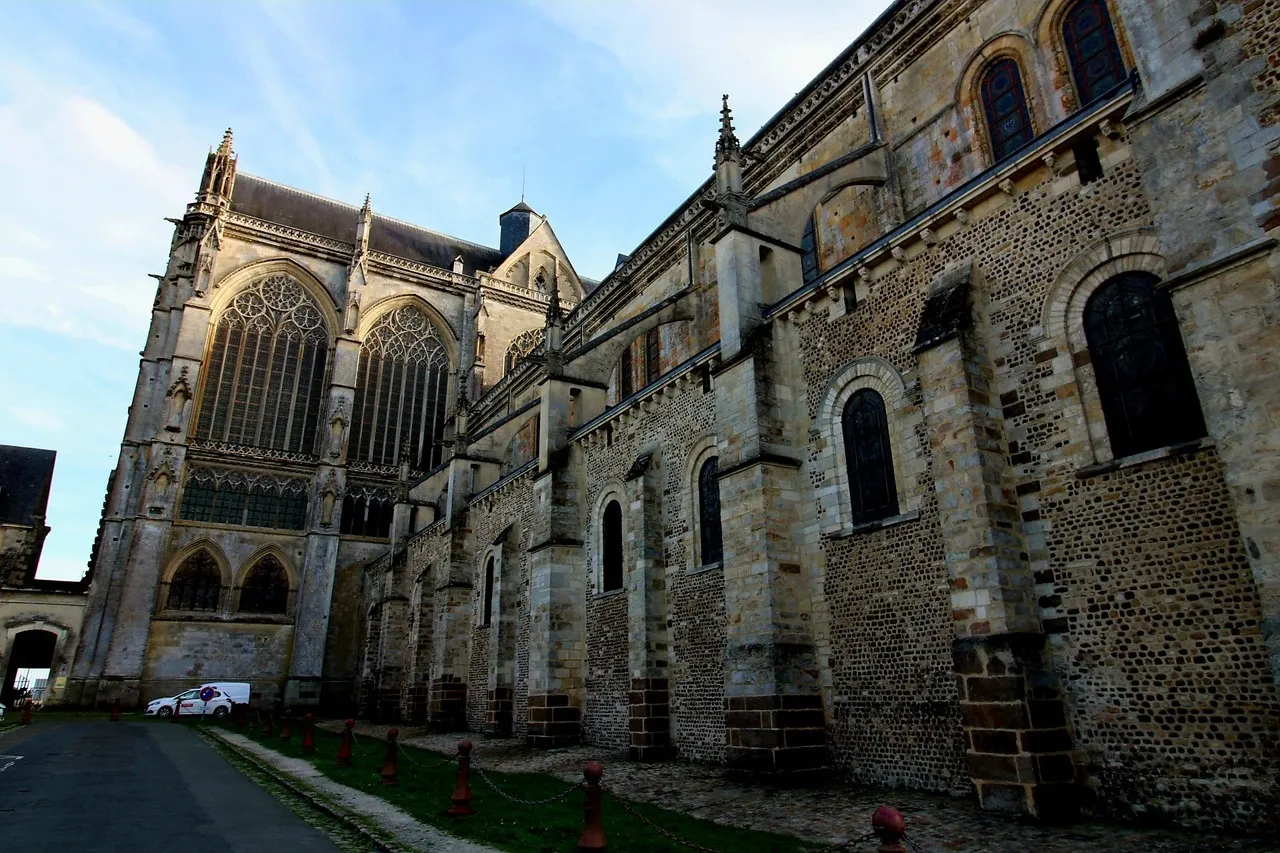
The Cathedral of Saint Julian of Le Mans, located in the city of Le Mans, France, is a stunning example of Gothic and Romanesque architecture, reflecting its long history and evolution over centuries. Dedicated to Saint Julian, the first bishop of Le Mans, this cathedral is one of the largest in France and serves as a spiritual and cultural landmark in the region.
Construction of the cathedral began in the 11th century, with significant expansions and modifications occurring through to the 15th century. Its architectural significance lies in its blend of styles: the Romanesque nave contrasts with the Gothic choir, which is particularly renowned for its soaring height and extensive use of stained glass. The choir's stained glass windows, dating from the 13th century, are celebrated for their vivid colors and intricate designs, depicting biblical stories and saints. Visitors are often captivated by the cathedral's unique flying buttresses and the magnificent Angevin vaulting, which contribute to its grandeur and structural integrity. The cathedral also houses a remarkable astronomical clock from the 14th century, offering insights into medieval technological advancements. As a focal point of Le Mans, the cathedral is not only a place of worship but also a site where history and art intertwine, making it a must-visit for those interested in architecture, history, and religious heritage. Its location in the heart of the old town, surrounded by cobblestone streets and half-timbered houses, enhances the experience, offering a glimpse into the rich past of Le Mans.
Construction of the cathedral began in the 11th century, with significant expansions and modifications occurring through to the 15th century. Its architectural significance lies in its blend of styles: the Romanesque nave contrasts with the Gothic choir, which is particularly renowned for its soaring height and extensive use of stained glass. The choir's stained glass windows, dating from the 13th century, are celebrated for their vivid colors and intricate designs, depicting biblical stories and saints. Visitors are often captivated by the cathedral's unique flying buttresses and the magnificent Angevin vaulting, which contribute to its grandeur and structural integrity. The cathedral also houses a remarkable astronomical clock from the 14th century, offering insights into medieval technological advancements. As a focal point of Le Mans, the cathedral is not only a place of worship but also a site where history and art intertwine, making it a must-visit for those interested in architecture, history, and religious heritage. Its location in the heart of the old town, surrounded by cobblestone streets and half-timbered houses, enhances the experience, offering a glimpse into the rich past of Le Mans.
🗺 Map
Want to see more? Download the app. It's free!
- Weather informationCheck the forecast, clouds, rain, visibility, temperature, and wind before you go. Download it for free!
- How to get there?Choose how to get there by car, walking, or public transport from your location. Download it for free!
- CollectionsSave this spot in lists for future trips.
- Visited PlacesMark places you have visited and see them together on one map.
- Favourite RegionsGet alerts when new spots are added in your favourite regions.
- Offline mapsDownload maps before a trip for places with weak connection.
- Upload your photosUpload your photos and help other travelers find good photo spots.
- Audio guidesCreate narrated guides to listen to while you visit a place.