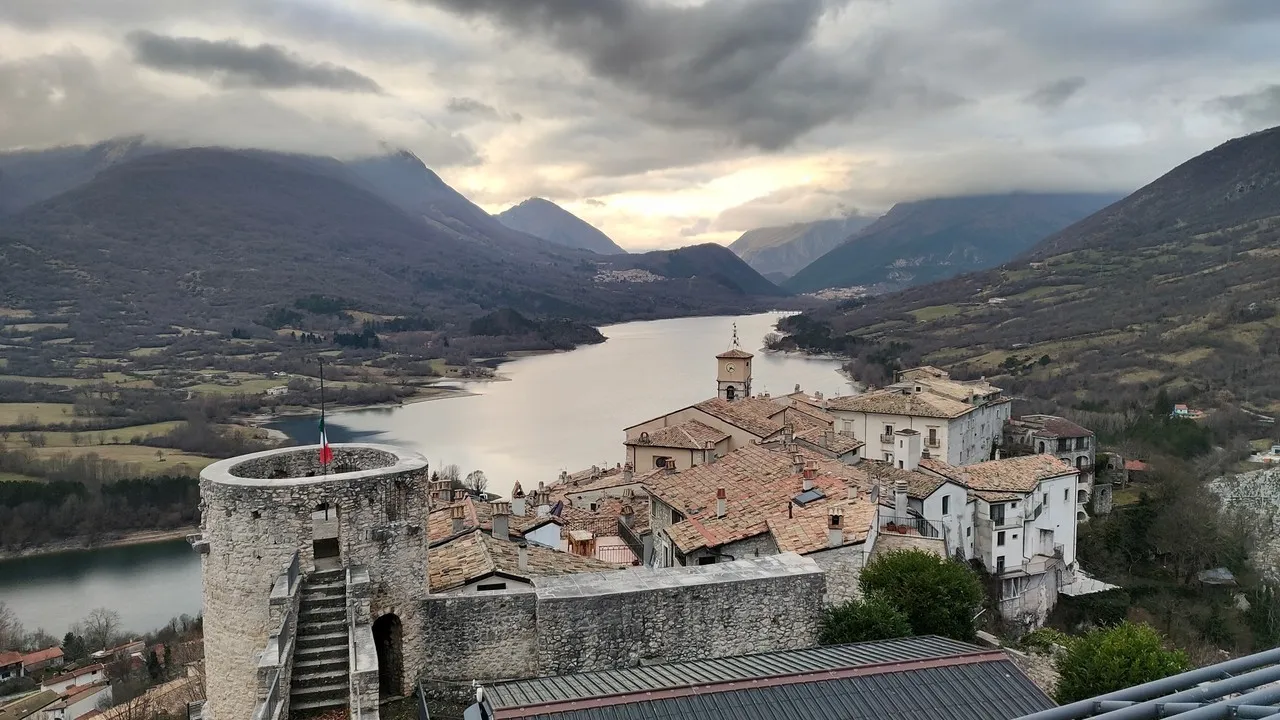
Perched above the village of Barrea in Abruzzo, the Castello Monumentale is the symbolic fortified complex that dominates the town skyline and frames views over Lago di Barrea and the surrounding peaks of the Abruzzo, Lazio and Molise National Park. What makes it interesting is less a single intact fortress than its role as a visible palimpsest: medieval military foundations, later rebuilding phases and a conspicuous tower combine to tell the story of a strategic lookout that controlled routes through the Sangro valley.
Historically the site dates to the Middle Ages, when local lords fortified the rocky spur to defend against raids and to monitor the valley; subsequent centuries brought repairs and modifications reflecting changing military needs and local power. Architecturally the Castello Monumentale is notable for its adaptive use of local stone, the surviving rectilinear masonry of the keep, fragmented curtain walls and terraced platforms that step down the slope — features that underline its function as a defensive, observation and communal symbol rather than a single palatial residence. Unique local aspects include its direct visual relationship with Lake Barrea (the castle appears to rise from the lakeside panorama) and its integration into village processions and seasonal cultural displays, when the ruins serve as a backdrop for concerts and commemorations. The site is primarily an open-air monument and viewpoint, valued for photography, history and landscape rather than interior museum spaces.
Historically the site dates to the Middle Ages, when local lords fortified the rocky spur to defend against raids and to monitor the valley; subsequent centuries brought repairs and modifications reflecting changing military needs and local power. Architecturally the Castello Monumentale is notable for its adaptive use of local stone, the surviving rectilinear masonry of the keep, fragmented curtain walls and terraced platforms that step down the slope — features that underline its function as a defensive, observation and communal symbol rather than a single palatial residence. Unique local aspects include its direct visual relationship with Lake Barrea (the castle appears to rise from the lakeside panorama) and its integration into village processions and seasonal cultural displays, when the ruins serve as a backdrop for concerts and commemorations. The site is primarily an open-air monument and viewpoint, valued for photography, history and landscape rather than interior museum spaces.
🗺 Map
Want to see more? Download the app. It's free!
- Weather informationCheck the forecast, clouds, rain, visibility, temperature, and wind before you go. Download it for free!
- How to get there?Choose how to get there by car, walking, or public transport from your location. Download it for free!
- CollectionsSave this spot in lists for future trips.
- Visited PlacesMark places you have visited and see them together on one map.
- Favourite RegionsGet alerts when new spots are added in your favourite regions.
- Offline mapsDownload maps before a trip for places with weak connection.
- Upload your photosUpload your photos and help other travelers find good photo spots.
- Audio guidesCreate narrated guides to listen to while you visit a place.